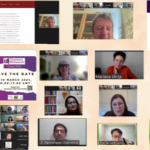
For our monthly MenTRnet meetings, we try to vary the content and format so sometimes members lead a discussion on different aspects of mentoring or we share our current projects or we invite guests to speak to the group. This July 2026, we invited Kenan Dikilitaş to speak to us on using data collection tools for student learning.
In Exploratory Action Research, we frequently include learners in the research process by asking them to share experiences and opinions on the classroom issue we are investigating. Hearing what learners think and feel about the learning process can be truly transformative for a teacher both in terms of their teaching and their relationship with their students.
Kenan’s ideas provide an alternative perspective. He proposes using data collection tools for students to learn with rather than viewing learners as producers of data for our research. He asked us to consider what might happen if we asked learners to generate data themselves, for example by interviewing one another or asking them to observe their own learning. This can give learners the opportunity to generate insights into their own learning practices, and Kenan asserts that the data generated in this particular way are more authentic because they are not influenced by the lens of teacher-researchers but are presented first-hand by the students themselves. More specifically, students collect and share data directly themselves. However, he also added that learners need some training in how to carry out an interview or some guidance on how to write reflectively and the insights can be discussed critically. In addition, he emphasised that as well as knowing how to use the tools, the students need to know why they are using them and the process will challenge their assumptions about learning.
Possible Data Collection Tools
Kenan proposed six different data collection tools that can promote learning, which include:
- Reflective writing
- A guided question on a core issue in their learning
- Learning diary (informal)
- Peer interviews
- Reading on learning strategies
- Sharing insights (individual enquiry to shared understanding)
In order for the tools to work well, Kenan considers the following four conditions to be important:
- students have a sense of ownership of the tools and contribute to their design
- the process includes the opportunity for dialogic feedback
- the tools are used more than once in order for students to develop their skills in using them
- the teacher scaffolds students’ critical engagement in their own data as well as helping them to learn to question their own data.
Then we moved into break-out rooms to discuss the following questions:
Which research tools do you already use? Which research tools can you hand over to your students so they can explore their own learning? How can they learn from the process?
We raised several questions in the feedback session after our discussions in the rooms such as: who decides on the topic for research, the students or the teacher? Would the teacher give them an option on the topic? Can the students choose their own questions? We also noted that often in EAR the research question or project tends to be set by the teacher. Would students need learner training in order to be able to design their own research tools? How can you involve all your learners if you teach a large class? Kenan advised us to decide at the beginning of a research project how and when we would like our learners to be involved and to consider inviting our learners to present their findings in different ways, for example visually.
Finally, Kenan set us the challenge of taking a step either as a teacher or a mentor to experiment with one of the ideas proposed in the session.
Some reflections
I found the ideas thought-provoking and I am sure findings such as these from learners could radically change a research process and the findings. However, I wonder how applicable it is to all contexts. At University level with pre-service teachers, I think learners would find this exciting and it also develops their research literacy. I wonder if in a school setting some of the tools might be more successful than others and the teacher would need to consider carefully how to introduce them and maintain learners’ interest and motivation throughout the research process. The gain is that it would give learners the opportunity to engage critically with their own learning. I do know from my experience with secondary school students that on the whole, they enjoy sharing their ideas and can be very frank about their experiences. Please share your ideas in the comments below.
We record all our sessions and these are made available to MenTRnet members. If you would like to see more on Kenan’s ideas, why not join MenTRnet? It’s free and everyone is welcome.
Professor Kenan Dikilitaş is Professor of University Pedagogy in the Department of Education at the University of Bergen, Norway. His research focuses on teacher development, with particular emphasis on teacher identity, action research, and teachers’ research literacy in teacher education. Professor Dikilitaş has published widely in these areas and has edited several books featuring chapters written by practicing teachers, helping to raise teachers’ voices.
About the Author(s)

Ana García Stone
Ana García Stone is based in Madrid and has worked in ELT for 30 years as a teacher, teacher trainer and teacher educator. Her current interests are mentoring teacher classroom-research and teacher-led forms of CPD. She has recently mentored teachers in Thailand, Cameroon, Nigeria and Azerbaijan.