When I first joined the Teachers Research! Online 2025 Conference as a chair, I expected to be facilitating conversations, ensuring sessions ran smoothly, and supporting presenters. What I did not expect was how this experience would reshape how I think and act as a mentor.
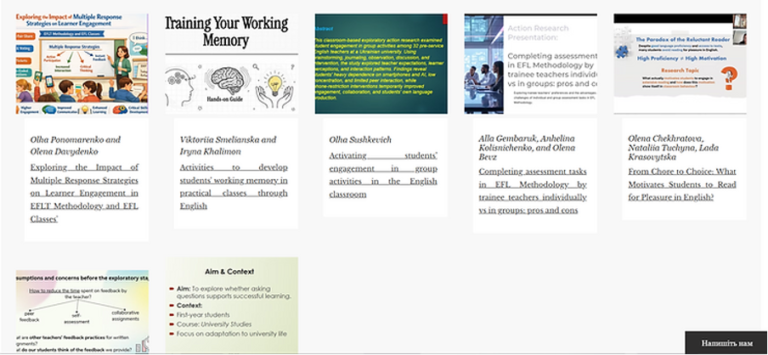
Over the course of chairing 19 presentations, featuring teacher-researchers from Argentina, Türkiye, Uzbekistan, India, and more, I was struck by the energy, courage, and insight that classroom practitioners brought to their inquiries. But what left the greatest impression on me was the opportunity to see mentoring from a new vantage point: not just as a relationship, but as a learning space for myself.
The Teachers Research! Online Conference: A catalyst for reflective mentorship
The Teachers Research! Online Conference gave me a gift I had not anticipated: an inclusive space to reflect not just on my mentee’s growth, but on who I am becoming as a mentor.
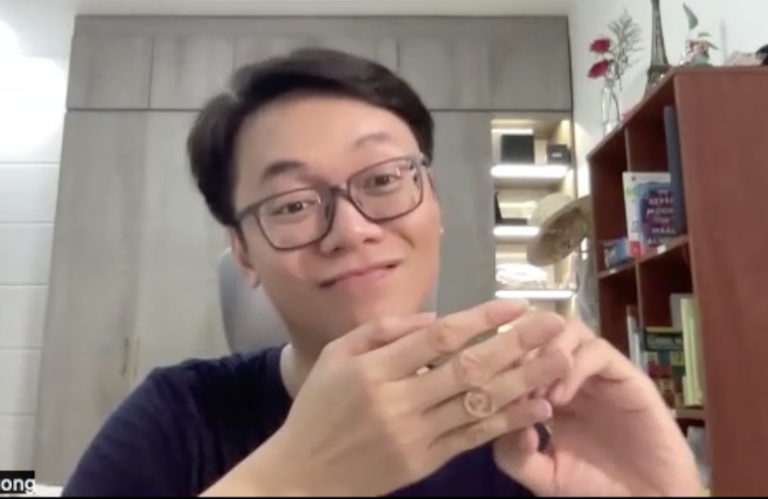
Mentoring within the Exploratory Action Research (EAR) framework (Smith, 2020), especially over the past two years with my mentee Yanli, has taught me that the mentor’s role is not about delivering solutions but about cultivating a space for reflective inquiry. The conference crystallized this understanding. It was during the Teachers Research! Online Conference that I came to see mentorship through a new lens, one that revealed not just Yanli’s growth, but my own. Watching her present her second-year project was a moment of quiet pride and unexpected reflection. Her growth was evident, not only in the clarity of her teacher-research design or her ability to speak confidently about ethical AI use, but in the way she responded to challenging questions. Her growth reflected not only her capabilities, but the collaborative, iterative nature of EAR that we had engaged in together.
It was through the conference that I began to reframe my mentoring practice. I shifted away from outcome-driven questioning, “What is your conclusion?”, towards more exploratory, open-ended dialogue: “What puzzled you in your classroom?” “What did you notice that surprised you?” “What patterns are emerging from your students’ responses?” These questions, rooted in curiosity and co-inquiry, invited more authentic reflection and positioned both of us as mentor and mentee.
This shift was not theoretical. It played out in real time during the development of Yanli’s AI project. Initially, I had reservations, concerns about the role of generative tools in language learning. But instead of asserting my stance, I chose to listen, observe, and engage critically with her process. Her data challenged my assumptions and expanded my perspective. I realized that mentorship in EAR is not about maintaining control. It is about surrendering to shared discovery.
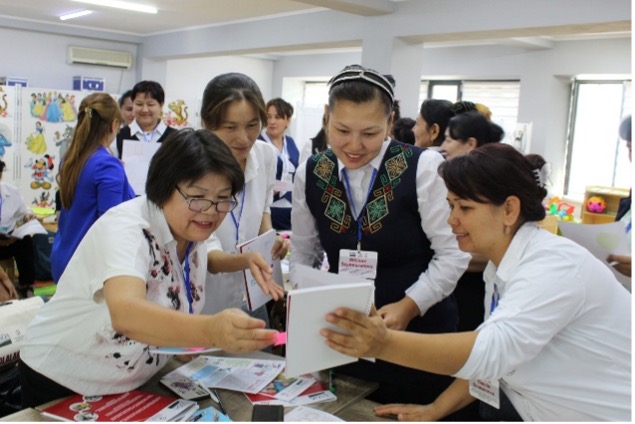
Perhaps the most transformative insight came through my engagement with other mentors during the conference. As we shared stories of missteps, surprises, emotional labour, and breakthroughs, I felt affirmed in the idea that mentoring is not a top-down process. It is a dialogic, relational, and caring practice that thrives on care, trust and mutual vulnerability.
Therefore, the conference did more than showcase research. It surfaced the invisible labour of mentoring and allowed me to see it through a new lens. I began to view my role not as a guide leading from the front, but as a co-explorer walking alongside, learning through the questions, uncertainties, and insights of my mentee.
The Teachers Research! Online Conference is often celebrated for empowering teacher-researchers, and rightly so. But what it also does, quietly and powerfully, is transform mentors. It brings our work into view. It reminds us that we are not alone. And it creates a community where reflection is not a side note, but the heart of the practice.
For me, this experience reaffirmed what I have come to believe: mentorship is not a transfer of knowledge. It is a co-creation of meaning. It is a space where both mentor and mentee grow, not always at the same pace, or in the same way, but through a shared commitment to inquiry and change.
Mentorship, I have learned, is not just about helping others find their voice. It is also about listening actively and differently, more patiently, more curiously, and with more humility. The Teachers Research! Conference helped me do that. And in doing so, it made me a caring, reflective and better mentor.
You can read more about Yanli and Chang’s mentor–mentee relationship here.
References
Smith R. (2020). Mentoring teachers to research their classrooms: a practical handbook. British Council.
About the Author(s)

Chang Liu
Chang Liu (China/UK) has been involved in ELT for over 12 years. She holds a PhD in Applied Linguistics from Newcastle University, where her research focused on thinking skills, practitioner research, and EFL writing. Her professional interests include critical thinking in language education, teacher research and evidence-informed practice, humanistic methodologies, mentoring teachers to conduct classroom-based research, and CPD. Chang has taught EFL at a Chinese university, worked collaboratively with Edinburgh Napier University, and she also held various academic roles including GTA, research associate, and editor for the ECLS Journal at Newcastle University. She is also a founding member of the SPROUT Collective, a cross-institutional initiative that supports sustainability in doctoral research.